The Sojourners Returning Home While Singing Praises
– Psalm 119:54-60, Mark 6:1-6, James 4:13-14
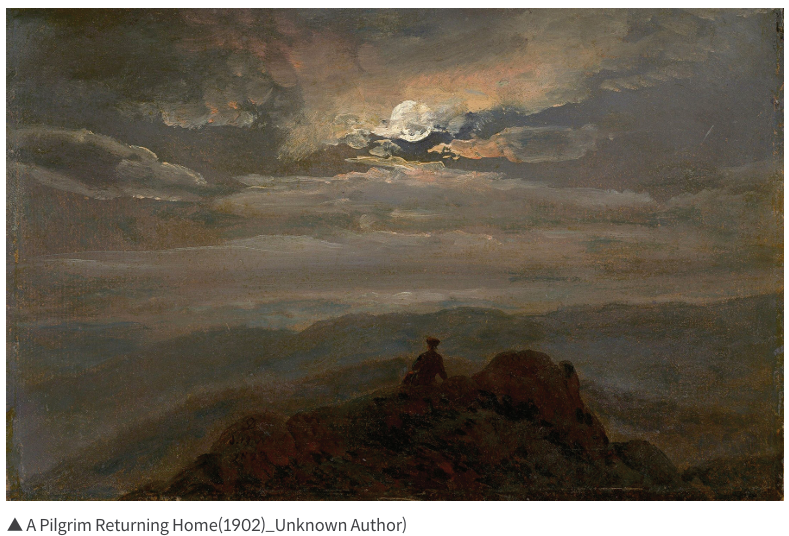
In a few days, the Lunar New Year holiday will be upon us. On Lunar New Year, those who have a hometown go to visit their ancestors or go to see their parents. In conclusion, Jesus had no hometown on this earth. Thoroughly and completely, Jesus was a sojourner. The Lord Himself said this. When He was arrested and suffering severe hardship, He said, “If I had a homeland in this world and belonged to this world, My servants would have come and would not have let this happen; but I do not belong to this world.”
John 18:36 Jesus answered, “My kingdom is not of this world. If My kingdom were of this world, then My servants would be fighting so that I would not be handed over to the Jews; but as it is, My kingdom is not of this realm.”
Through today’s message, I have chosen the title “The Sojourners Returning Home While Singing Praises” The Chinese character for “hometown” is “go-hyang” (故鄕): (故) means a place with personal ties—like when we say, “That person has roots in that region”—and hyang (鄕) means a rural village. A hometown is the place where one is born and raised, where one’s ancestors lived and enjoyed life for a long time. The people of the Bible lived as pilgrims, setting their true homeland—the home they longed for—not on this earth, but in heaven. This is also recorded in Hebrews 11:13–16.
A sojourner is someone who lives away from their homeland.
Beloved saints, we all live once and then pass on—only one life, just as Genesis 3:19 and Hebrews 9:27 say. We only have one life. In everything we do, we have practice, but in life, we don’t get a practice run. Our days are short. This is not just my opinion; even though the prophets and saints of old lived for hundreds of years, they confessed that life flies by swiftly, like sparks flying up from a fire, like an arrow shot quickly. A sojourner is someone who lives having left their homeland. Those who do not believe do not know that they are sojourners. However, those who believe in God and make heaven their hometown believe steadfastly, “We are pilgrims. Our true home is in heaven.” The very earth we are living on is itself a sojourner’s dwelling.
Those who go home embrace Je- sus’ solitude and sojourner’s heart.
Those who are going home carry with them Jesus’ solitude and His sojourner’s heart. This is how you avoid sin. Going home isn’t always peaceful and comfortable. The moment you hear, “Father is in the hospital,” or “Your brother is sick and unwell,” your heart already grows heavy. When we look at our true homeland in heaven as described in Revelation 21–22, it is perfectly peaceful, free from pain, death, or tears. So when you go to your earthly hometown, don’t just rejoice, but try to realize the spiritual homeland. Carry Jesus’ loneliness with you. It will help you refrain from doing foolish things. In the Ten Commandments, the first four commandments concern our relationship with God. The last six concern our relationship with others, and it starts with the commandment to honor our parents. Filial piety is the first commandment. As Ephesians 6:1–3 says, honoring your parents brings long life.
No matter how nice a house is, it is nothing more than a temporary inn. Even if, on paper, a piece of land is legally mine, and even if I have hundreds of billions or trillions in wealth, if God says, “It is not yours,” then I own nothing at all. Didn’t David make this kind of confession in Psalm 119:54–60? We may hold things for a short time, but when God calls us, we are strangers who must leave everything behind. A stranger must leave after his business is done. There is no need to linger or loiter. Wasn’t Job a very wealthy man in the land of Uz in the East? Whenever Job came out into town, both adults and children bowed their heads before him. He lived a life of profound piety and was a deeply respected man. Yet when a violent wind blew and killed all ten of his children in a single day, how much did Job’s wife complain and speak bitterly? The Lord gives, and the Lord takes away. Completely naked we come into this world, and when we leave, we take nothing with us. Such is the life that Job confessed.
David, as a sojourner, realized the mystery of God and sang praises.
Those of you going to your hometown for the holidays, go like King David, praising. Listen to hymns in the car as you go. David said, “Your statutes are my songs in the house of my pilgrimage” (Ps 119:54). King David spent thirteen years building his palace. The cedars from Lebanon were over a meter and a half in circumference. Surely there were many attendants and soldiers in that palace. Yet before God, David called it a sojourner’s house. Sojourners have no possessions. What a blessing to believe in Jesus! We have hope. Even if we die, we will be resurrected and live. At the moment of death, believers will go straight to heaven. But for those who don’t believe, won’t death be a hell of fire and brimstone? This is not my own word—the Bible speaks of this. David called himself a sojourner. He praised God and sang hymns. As a sojourner, he came to understand the mystery of God and became a great man of faith. He rejoiced, saying, “God is the God of sojourners.” From Adam, the first human, until the day Jesus returns, all who have come and gone are sojourners.
Where does life come from, and where does it go? We brought nothing into this world, and we can take nothing out of it. Even if we could take the things of this earth with us, they would be useless in that kingdom. Revelation 21 says the twelve gates are made of pearl and the streets are pure gold. It says there is no need for the sun, moon, or stars. The Lamb is our light, and there is no night there.
1 Timothy 6:7 For we have brought nothing into the world, so we cannot take anything out of it either.
Job 1:21 He said, “Naked I came from my mother’s womb, And naked I shall return there. The Lord gave and the Lord has taken away. Blessed be the name of the Lord.”
If there is a problem with many people today who say they believe, it is greed and selfish desire. We think that we will finally be satisfied if we can just have one more thing. Even if you have nothing, resolve to love God and trust in Him alone. In John 14:1, Jesus says not to let your heart be troubled, and that He will go to prepare a place for you and then come again to take you there. How wonderful it would be to go to that kingdom. When you go to your hometown, do not let your heart be hurt. Even if it does get hurt, just set your hearts on heaven.
Proverbs 15:27 He who profits illicitly trou- bles his own house, But he who hates bribes will live.
Proverbs 23:4 Do not weary yourself to gain wealth, Cease from your [a]consideration of it.
Proverbs 28:20 A faithful man will abound with blessings, But he who makes haste to be rich will not go unpunished.
When you go to your hometown, go thoughtfully.
A man was sitting on a park bench. A cleaner noticed that he was deep in thought. As the sun was setting and it was time to finish work, the cleaner went up to him and asked, “Who are you?” The man replied, “Well, I don’t know who I am, so I’m thinking deeply about it.” The cleaner then asked, “Where did you come from?” The man answered, “I don’t know that either, so I’m thinking about that too.” The cleaner asked, “Then when and where are you going?” The man replied, “If I knew that I would have left already.” This is a story about the famous philosopher Descartes. He lived a life of constant reflection: Where did I come from, where am I going, what kind of being am I? These are the most fundamental questions of life: What is life? Where did we come from? Where are we going? When you go to your hometown, be like Descartes. Take time to reflect.
Jesus came as a sojourner and left as a sojourner. Our problem is that we do not have a clear answer to the question: Where did I come from, and where am I going? Many people just live without thinking, simply because they are alive. But where is our life headed? What is the direction of my life? What is my purpose? Where am I headed right now? Such introspection is necessary. The Bible clearly teaches us about life, about who we are. It also tells us where we came from and where we are going. In John 14:6, Jesus said, “I am the way, the truth, and the life.” And in Acts 4:12, Peter declared that there is no other name under heaven given to mankind by which we must be saved except Jesus. How blessed and happy we are to know this.
We will sing one hymn together,
Hymn No. 290.
1 I’m but a stranger here, Heaven is my home;
Earth is a desert drear;
Heaven is my home:
Danger and sorrow stand
Round me on every hand;
Heaven is my fatherland,
Heaven is my home.
2 What though the tempest rage,
Heaven is my home;
Short is my pilgrimage,
Heaven is my home:
And time’s wild wintry blast
Soon shall be overpast;
I shall reach home at last,
Heaven is my home.
3 There at my Saviour’s side,
Heaven is my home;
I shall be glorified,
Heaven is my home.
There are the good and blest,
Those I love most and best;
And there I too shall rest,
Heaven is my home.
Joseph, who was the prime minister of Egypt, had already passed seven years of plenty and was in the second year of famine with five more years of famine still left. At that time, he brought his father Jacob before Pharaoh. Pharaoh asked Jacob, “How old are you?” Jacob answered, “The years of my pilgrimage are 130. My years have been few and difficult, and they have not reached the years of the pilgrimage of my fathers” (Gen 47:9). Jacob met Pharaoh at 130 years old, lived 17 more years, and died at 147. Although Jacob received many blessings from God, he confessed that his life had been the years of a pilgrim. Human life is like grass, and all its glory is like a flower. After grass is cut, it quickly dries up. Even the most beautiful flower soon withers.
Psalm 90:10 As for the days of our life, they contain seventy years, or if due to strength, eighty years, yet their pride is but labor and sorrow; for soon it is gone and we fly away.
Psalm 103:15 As for man, his days are like grass; as a flower of the field, so he flour- ishes.
A Sojourner Who Boasts of God’s In- heritance
Beloved saints, like David, we must be sojourners who boast. Boast in God, in Jesus, in the Holy Spirit, in the church, in the ability to share the gospel. When you go to your hometown, boast that you are going with prayer and with faith before God. But if you push God aside and go only with worldly thoughts—even if your car is filled with gifts your parents like—try going without prayer before God. I worry that some might do that, which is why I’m saying this today. In 1 Chronicles 29:15, David said, “Before You we are strangers and sojourners, as all our fathers were; our days on the earth are like a shadow, and there is no hope.” David made this confession at the end of his life, around age seventy, just before his death.
David called all his ancestors sojourners. Abraham, Isaac, and Jacob were great and blessed with wealth by God, but David recognized it all belonged to God. The more I read the Bible, the more I bow my head in awe at David’s response. He saw his ancestors as sojourners and took pride in that. He didn’t boast about the inheritance they left him; instead, he said his true inheritance was keeping God’s word and trusting in it. David lived with purpose. First, to please God; second, to glorify God; and third, to obey His Word.
Beloved saints, when we journey toward our true home, remember that God’s Word is our inheritance. Obeying and trusting His Word faithfully is the great reward we will receive in that kingdom. Even the writer of Hebrews proudly declared being a sojourner, boldly testifying that his ancestors were sojourners too.
Hebrews 11:13-16 All these died in faith, without receiving the promises, but hav- ing seen them and having welcomed them from a distance, and having confessed that they were strangers and exiles on the earth. For those who say such things make it clear that they are seeking a country of their own. And indeed if they had been thinking of that country from which they went out, they would have had opportunity to return. But as it is, they desire a better country, that is, a heavenly one. Therefore God is not ashamed to be called their God; for He has prepared a city for them.
The song “Tayang Sari” (lyrics by Kim Dong- in, music by Song Bong, sung by Go Bok-su) has a line in the second verse: “Like floating duckweed, my life alone is so frustrating.” Duckweed floats on water. That’s what life as a sojourner in this world can feel like: drifting alone, fragile, uncertain. But for believers, it’s different. Though we may seem like floating duckweed, we are not alone—we are with Immanuel, God with us. We live as sojourners with hope in the heavenly manna, receiving a lasting, incorruptible, unfailing inheritance from heaven. Isn’t that wonderful?
Pyungkang Cheil Church is God’s “pillow”
Jacob bought the birthright from his brother with a bowl of stew, and later deceived his father to receive the blessing meant for his brother. According to Scripture, the firstborn was entitled to a double inheritance. In Genesis 27, Esau, his older brother, tore his clothes and wept loudly, angry that his birthright and blessing had been taken from him, even considering killing Jacob. So Jacob, afraid of Esau, fled. As evening came, he stopped in a place originally called Luz. With no pillow, he picked a suitable stone to rest his head. Then he saw a ladder reach to heaven, with angels going up and down. God spoke, saying, “I am the Lord, the God of your father Abraham and the God of Isaac. The land you lie on I will give to you. Your descendants will be as numerous as the dust of the earth. Do not be afraid. I will not leave you until I have done what I have promised through you.” Jacob awoke from his dream deeply moved. Genesis 28:16 says, “Surely the Lord is in this place, and I was not aware of it.” He set up the stone he had rested on, poured oil on it, and worshiped God in thanksgiving, saying, “How awesome is this place! This is none other than the house of God; this is the gate of heaven.”
When you return home, take the “pillow of faith” with you.
Beloved saints, when you go to your hometown, take the “pillow of faith” with you. When we sleep, our feet and back touch the mattress, but we rest our head on a pillow. There is profound meaning in this: while the body stays on the ground, the head is lifted—set apart. Jacob clearly heard God’s voice and declared that the place where he laid his pillow of stone was God’s temple, the gate of heaven. Beloved saints, Pyungkang Cheil Church is God’s pillow. Every time you receive the Word and pray here, the gates of heaven open. It is truly the gate of heaven. Even when you go home to your hometown, don’t forget the church. Remember your spiritual pillow: this is God’s temple, this is the gate of heaven! How mysterious and wonderful this truth is. No matter how much you live attached to the world, coming to church on Sunday lifts your heart from the ground and turns it toward heaven. Worldly thoughts bring death, but the thoughts of the Spirit bring life and peace. So even when you go to the countryside or to your hometown, just as Jacob set up the stone he slept on and poured oil on it, think, “How awesome this is! This is God’s temple! God’s church! This is the gate of heaven!” Hold on to that mysterious truth. Do not bow down to false idols, and even if there is suffering, immediately turn your heart toward the heavenly world described in Revelation 21–22, where there is no more sorrow, pain, or tears. After returning from your hometown, do not let trials keep you from coming to church. May this Lunar New Year be a time of victory in faith.
Let us pray.
God, as many go to their hometowns for the Lunar New Year, we thank You for Your constant care and grace. Through the Scriptures of the Old and New Testaments, we have learned much and grown in our faith. Even when we go home, may we not bow to false idols or commit sin. Even if we face frustration, sadness, or discouragement there, let us be able to turn our hearts in faith so that heaven becomes our true home. We give thanks for the Word You give today. Although Your unworthy servant cannot testify fully, may the Holy Spirit work in the hearts of our congregation so that they truly understand and experience Your truth. Until we meet again, let us be thankful before You, hold on to the hope of heaven, and be comforted by Your Word. Not only for the saints present here today, but also for every household of all registered members of Pyungkang Cheil Church, please sanctify them. Even when seeing the children You have given as gifts brings sighs, worry, or discouragement, may the Word you have given us dispel the darkness and allow us to experience the wonderful work of grace that will bring about prosperity. We lift all these requests and prayers in the holy name of Jesus Christ, giving thanks. Amen.
February 6, 2005, Sunday Service
Sermon by Rev. Abraham Park
*You can also read this article on the 'True Peace' online platform.
(http://champyungan.com)
 Jesus’ Shocking Declaration